
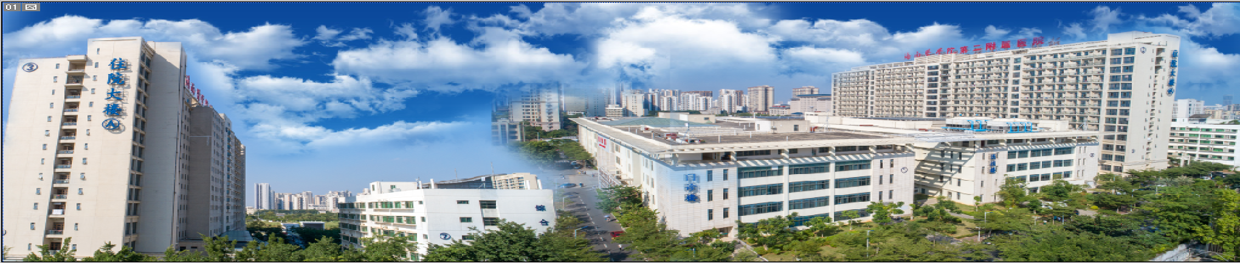
The 74th Anniversary Commemoration & High Quality Development Reform Mobilization Conference of the Second Affiliated Hospital of Hainan Medical University (SHHMU) Convenes
August 13, 2026 — The Second Affiliated Hospital of Hainan Medical University (SHHMU) held its 74th Anniversary Commemoration and High Quality Development Reform Mobilization Conference. Centered on the theme Honoring a 74 Year Old Original Aspiration, Empowering a New Journey Through Reform, the event revisited the hospital’s 74 year evolution and ten year progress following university hospital integration, while rolling out comprehensive plans for high quality development and institutional reform.
Present at the meeting were Zhang Caihong, Party Secretary of Hainan Medical University; Yu Yonghui, Director of the University Party Government Office; Lu Na, Deputy Director of the Party Government Office and Director of the Hospital Development Office; Lin Feng, Director of the Advisory Committee for Reform & Development of Hainan Medical University Affiliated Hospitals, Hospital President Advisor and Academic Leader of Gastrointestinal Surgery; Wang Yi, Chief Expert of SHHMU; members of the hospital’s senior leadership team; retired former leaders and veteran specialists; secretaries and deputy secretaries of Party branches; Party representatives; department directors, head nurses and key clinical staff. The conference was presided over by Chen Huanxiong, Vice President (Acting President).
The solemn conference kicked off at 8 a.m. Chen Huanxiong opened the session by introducing the theme, distinguished guests and the significance of combining anniversary observance with reform mobilization.
A special documentary marking the 74th anniversary screened, taking attendees through the hospital’s full trajectory since its founding in 1952 in a makeshift temple, and its multiple name changes. Footage highlighted landmark milestones: military reclamation era pioneering, development under Hainan agricultural reclamation, attainment of Grade A Tertiary Hospital status, and transformative advancement after its full institutional transfer to Hainan Medical University. Vintage medical devices, group portraits of early generation medical teams and archival surgical photos illustrated the hard working, pioneering ethos forged by successive generations of SHHMU staff.
A hospital history archive donation ceremony followed. Zhao Weiyong, son of former ENT Director Sun Ke, presented precious historical materials to the hospital museum. Li Jie accepted the donation and awarded a commemorative certificate. These physical mementos preserving memories of the hospital’s early days will be permanently archived as living teaching resources to pass down institutional heritage and inspire future practitioners.
Professor Wang Yi, a senior builder who has witnessed successive institutional restructurings and witnessed disciplines grow from scratch, shared decades long insights from clinical and administrative practice. He recounted how the facility evolved from a rudimentary field medical station into a Grade A Tertiary teaching hospital qualified for four categories of organ transplantation and accredited under international hospital standards. He reviewed comprehensive advances in disciplines, talent cultivation and scientific research after the full transfer to Hainan Medical University in 2016. Addressing ongoing disciplinary realignment reforms, he urged all staff to uphold the pioneering legacy, embrace change proactively and deliver tangible results to elevate SHHMU to new heights.
Ahead of China’s 9th Physicians’ Day, the conference also staged 2026 physician awards. Pang Xiaoman read out the list of honorees. Zhang Caihong, University Party Secretary, and Li Jie, Hospital Party Secretary, presented commemorative medallions to medical professionals with 35 years of clinical service. Representatives of these 35 year career physicians then awarded certificates to Outstanding Chief Resident Physicians. Liu Xianxia, Director of the First Cardiology Ward and outstanding physician representative, delivered remarks reflecting on professional mission and responsibility.
At 10 a.m., the reform mobilization segment formally commenced. Li Jie, Hospital Party Secretary, delivered the mobilization report. She noted that SHHMU’s history represents both a chronicle of arduous growth and a record of progressive reform. Convening the mobilization conference on the 74th anniversary milestone draws inspiration from institutional history, reviews earlier reform outcomes, defines key upcoming tasks and builds unified consensus across the workforce.
Since reform initiatives were launched in January 2026, 40 supervised tasks have advanced in phased implementation. Top level frameworks have been rolled out, institutional mechanisms refined and pilot projects steadily executed. Starting in August, SHHMU’s reform has moved beyond top level design and limited pilots into a new phase featuring closed loop model validation, hospital wide phased disciplinary restructuring, full recruitment for middle level management posts and trial operation of revised systems.
Secretary Li stressed that reform cannot be accomplished overnight. It must follow a complete closed loop approach: strategic planning first, institutional foundation building, pilot breakthroughs, phased roll out and sustained optimization. The prior “pilot first, scale up later” strategy aimed to consolidate foundations and mitigate risks. Moving forward, reform efforts will deepen across four priority dimensions: disciplinary quality improvement, human resources empowerment, operational efficiency gains and risk containment.
A solemn target responsibility signing ceremony ensued. Vice President Zeng Yuecan announced the lineup of newly restructured disciplines and their appointed heads. Newly appointed discipline directors took the stage and signed Discipline Director Target Responsibility Agreements with Vice President Chen Huanxiong, codifying core assessment metrics covering discipline development, clinical quality, research and teaching.
Following the signing, three heads of restructured disciplines — Sun Ming (Urology), Li Xiaoyue (Critical Care Medicine), Jiang Yi (Medical Imaging) — presented medium and long term development roadmaps. They outlined phased objectives: solid foundations within one year, quality breakthroughs within three years and brand eminence within five years, detailing concrete pathways for disciplinary advancement.
Zhang Caihong, Party Secretary of Hainan Medical University, delivered an important address anchored in the agricultural reclamation pioneering spirit. Using the metaphor of “dividing the cake” and “making the cake bigger”, she articulated the dual mission of the conference and charted the way forward for SHHMU personnel.
“Today’s gathering carries twofold meaning: dividing the cake, and making the cake,” Zhang explained. “‘Dividing the cake’ means honoring our 74 year long journey and celebrating our legacy. Born amid Hainan’s agricultural reclamation era, our predecessors built front line healthcare in rudimentary temple facilities beside mountainous rubber plantations. The ethos of hard struggle and fearless pioneering runs deep in SHHMU’s DNA. Seventy four years of trials and ten years of university hospital integration have built our present day institutional foundation, a hard won legacy we must respect and cherish. The archive donations, senior generation testimonials and physician tributes today allow us to reflect collectively on achievements forged by past generations.”
“‘Making the cake bigger’ means pressing ahead with reform to shape our future. To match the medical development requirements of the Hainan Free Trade Port, SHHMU faces evident shortcomings: fragmented discipline layout, shortages of leading caliber specialists, and disconnects among clinical care, education and research. Decades ago, reclamation pioneers overcame technical barriers to cultivate high yield rubber on Hainan’s barren hills through fearless trail blazing. Today’s disciplinary integration reform demands that we reclaim that pioneering spirit as our guiding compass. We must break down silos between departments, revamp incentive systems and build high impact flagship specialties to jointly expand and enhance our high quality development ‘cake’.”
“Reform is not an optional exercise; it is an imperative we must deliver on.” Secretary Zhang laid out four requirements for SHHMU’s reform drive. First, anchor reform in the agricultural reclamation ethos to strengthen core resolve: Party members and cadres must step forward, reject passive “wait and see” mindsets and forge broad consensus. Second, advance disciplinary integration guided by the pioneering spirit to cultivate “high yield rubber groves” of clinical excellence: dismantle departmental barriers, amplify strengths and remedy weaknesses, with model disciplines leading hospital wide progress to nurture 3 5 flagship specialties. Third, energize institutional mechanisms to create fast track conditions for professionals: replace egalitarian norms with value driven performance evaluation and strengthen systems for recruiting and developing talent. Fourth, uphold dual founding missions: safeguard the “dual lifelines” of public interest oriented patient care and workforce growth. Reform shall both protect public health and create career growth platforms for medical staff. She called on all SHHMU employees to reject passivity, gossip and hesitation; instead, to participate, contribute and benefit from institutional transformation.
“I am confident that staff at SHHMU have never shied away from starting anew, nor lacked courage for fresh departures.” Zhang concluded with sincere festive greetings for physicians, paying high tribute to front line clinicians. She encouraged all medical workers to uphold their professional calling, carry forward the reclamation era dedication and safeguard people’s health on the reform driven new journey.
Seventy four years of knowledge and mission have been passed from one generation to the next. Taking this conference as a fresh starting point, SHHMU will honor its historical legacy, seize university hospital integration opportunities, overcome challenges with bold resolve and sustain long term commitment. By steadfastly advancing comprehensive reform, the hospital strives to write a new chapter of high quality development.
Copyright © 2017-2019 Second Affiliated Hospital of Hainan Medical University
368 Yehai Av., Haikou, Hainan, P.R. China, 570311 Tel: 0086-898-66809130 Fax: 0086-898-66817562
 Care
Care